



Water Jet Machine Price: Precision & Factory-Direct Deals?
Water Jet Machine Price: Precision & Factory-Direct Deals?
Water Jet Machine Price: What Really Drives the Numbers in 2025
People ask me all the time about water jet machine price. To be honest, it’s not a single number. It’s a stack of choices: pressure, robot count, fixtures, safety spec, even the kind of plastics you’re trimming. After a decade poking around shop floors, I can tell you the smartest buyers start with their part mix and takt time, then map cost to throughput.
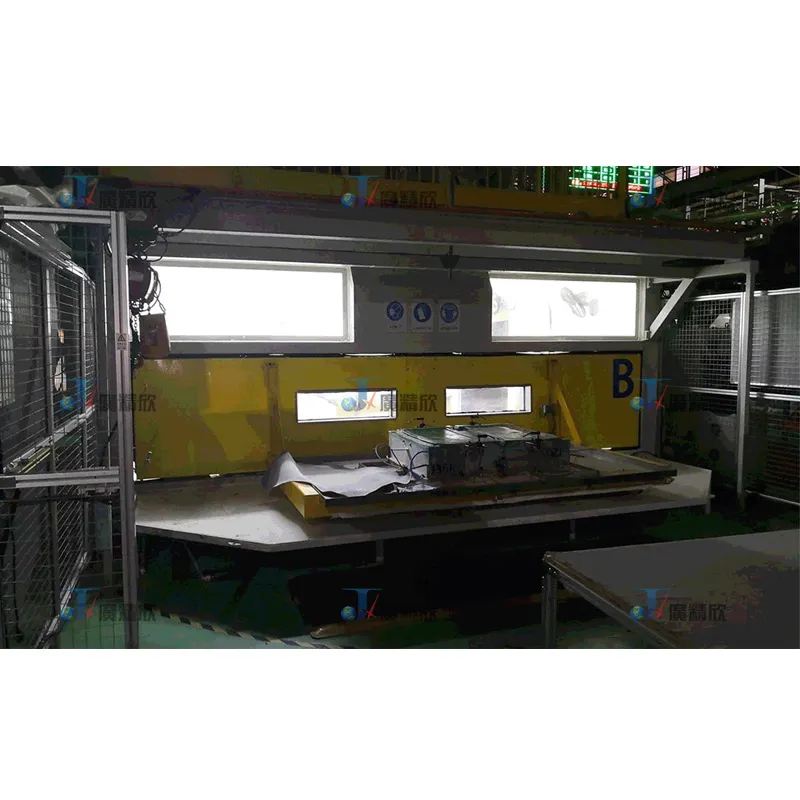
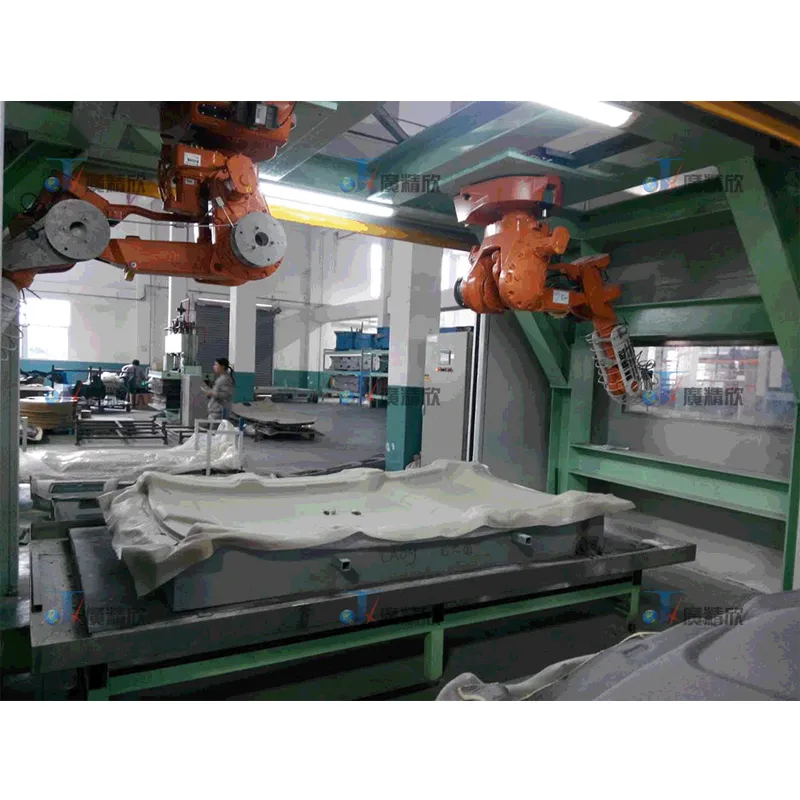
One system I’ve been watching closely is “Robotic High-Pressure Waterjet Cutting” from a manufacturer based at No.398, Qianxing Road, Qiantang Town, Hechuan District, Chongqing, P.R.C. It’s a 6-axis, upside‑down robot architecture aimed at automotive interiors—cutting positioning holes, skylights, handles, and similar shapes. Multiple robots can team up, with rhythm as fast as 55 seconds per piece. Actually impressive for headliners and door panels.
Industry trend check
EV interiors, lightweight PP/ABS sandwich panels, PU foam laminates, PET felts—these are booming. Waterjet (pure water, no abrasive) stays popular because it’s cold cutting, burr‑free, low kerf, and friendlier to soft composites. Meanwhile, tighter gigafactory cadence means robotic cells with smaller footprints—hence the upside‑down mounting to keep floors clear for fixtures and conveyors.
What affects water jet machine price most
- Pump pressure and power: ≈3,800–4,100 bar; bigger pumps raise capex, but cut faster.
- Robot count and reach: single vs multi‑robot cells; upside‑down mounting saves space.
- Fixtures and changeover: vacuum jigs, pin nests, quick swaps.
- Safety and compliance: CE, ISO 10218, EN 1829; guarding adds cost but saves headaches.
- Automation: infeed/outfeed, vision, traceability (PPAP/IATF-ready) = higher initial, smoother audits.
Typical 2025 price ranges (indicative)
Single-robot interior trimming cells: around $180k–$450k. Multi-robot cells for high-mix lines: roughly $350k–$900k. Real-world use may vary—complex fixtures, high-spec safety, or strict OEM quality gates can push the number up. That’s normal, not a red flag.
Product snapshot: Robotic High-Pressure Waterjet Cutting
| Robot axes | 6-axis (upside‑down multi-robot option) |
| Max pressure | ≈3,800–4,100 bar (pure water) |
| Cycle time | Up to 55 s/piece (part-dependent) |
| Orifice / focusing | ≈Ø0.25–0.35 mm sapphire; no abrasive |
| Accuracy | Hole pos. repeatability ≈±0.3 mm on interior parts |
| Footprint | Compact cell; upside‑down robots free floor area |
Process flow, materials, and QA
Materials: PP/ABS headliners, PU foam laminates, PET felt, fabric-backed composites. Methods: locate on vacuum/pin fixture → robot path executes pure-water cuts → edge inspection → CMM sampling. Testing: hole diameter/position via CMM (ISO 10360-2), edge quality Ra (ISO 4287), part conformance under customer PPAP. Service life (typical): pump seals ≈600–1,000 h on pure water; sapphire orifice ≈200–400 h; HPU filters 250–500 h. We’ve seen lines run two shifts with predictable maintenance—many customers say uptime is the surprise win.
Applications and advantages
- Automotive interiors: headliners, door trims, trunk liners, acoustic pads.
- Textiles and foams: clean, burr‑free edges; no burn marks.
- Advantages: cold cutting, narrow kerf, low tool wear, easy robot reach into tight cavities.
Vendor comparison (indicative)
| Vendor/Cell | Focus | Price range ≈ | Notable strengths |
|---|---|---|---|
| Robotic High-Pressure Waterjet Cutting | Automotive interiors | $180k–$900k | Up to 55 s/piece; compact upside‑down layout |
| Global Brand A (robotic cell) | High-volume robotic trimming | $250k–$1.2M | Broad service network; options galore |
| 2D Gantry Waterjet | Flat sheets, nesting | $90k–$350k | Great for panels; less ideal for deep cavities |
Customization and compliance
Options include dual fixtures for SMED-style changeover, in-line vision, part marking, and MES handshakes. Safety can be built to EN 1829, ISO 10218, ISO 13849, plus CE/UL where required. I’ve seen OEM audits go smoother when traceability and lockout/tagout points are clearly documented.
Mini case study
A Tier‑1 in seat/headliner modules added a two‑robot cell. Cycle dropped from 78 s to 55 s; first‑pass yield rose from 96.2% to 99.1% over 60 days. Scrap fell by 38%. ROI landed in ~13 months. Anecdotal? Sure—but the data logs backed it.
Bottom line: if you’re chasing a justifiable water jet machine price, tie the quote to takt time, part mix, and your PPAP gate. The math usually works out.