



Carpet Machine Maker | High-Speed, Durable, OEM
Carpet Machine Maker | High-Speed, Durable, OEM
What a modern carpet line really needs: an insider look at the Telescopic Oven
I’ve spent enough time in plants to know that the unsung hero of molded carpet production is the heat section. If you’re evaluating a carpet machine maker, the one piece I’d scrutinize first is the oven. Recently, I visited a facility at No.398, Qianxing Road, Qiantang Town, Hechuan District, Chongqing, P.R.C, where the Telescopic Oven is built, and—honestly—it felt like someone finally optimized the part of the line that always causes bottlenecks.
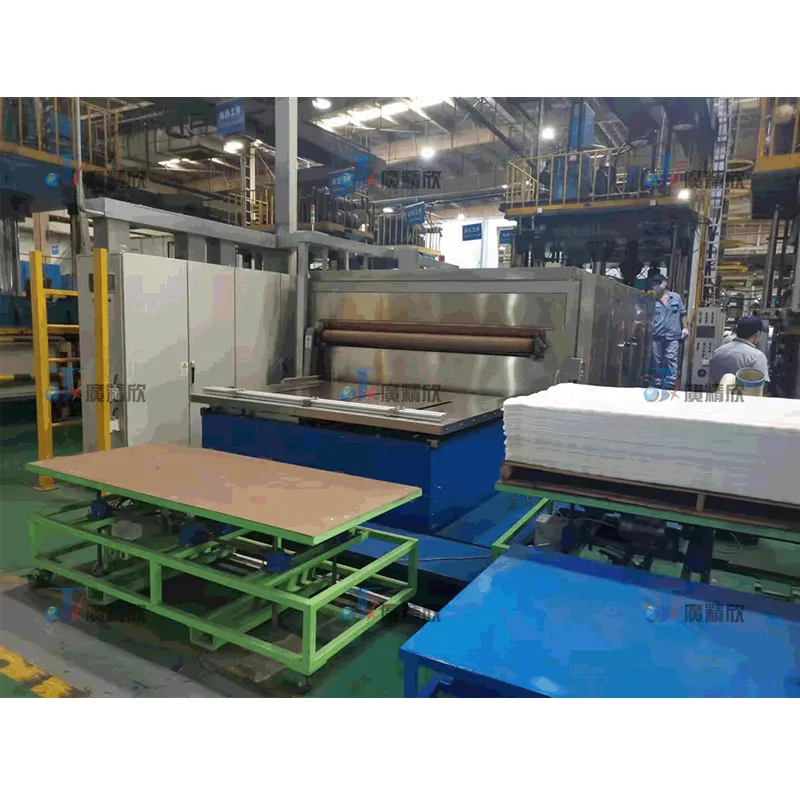
Why this oven matters (and where it fits)
The Telescopic Oven runs two independent heating layers at once, feeding a molding press via a high-temperature, multi-stage belt. Smaller footprint, longer conveying distance—so you can stage materials right up to the tool without sprawling across the floor. Multiple heating modes allow tighter recipes; fastest beat clocks at ≈50 s/piece in ideal setups. It’s aimed at thermoplastic-based automotive carpets (think PP/PET needle-punch felt with binder), but I’ve seen it handle trunk liners, underbody insulation, and even headliner substrates with minimal changeover.
Typical process flow (real-world)
- Material in: rolls or cut sheets of PP/PET felt, composite stacks with PE/EVA binder, optional scrim or foil.
- Pre-stage on the lower/upper belts; multi-zone preheat, then target soak.
- Convey to press interface; multi-stage discharge belt meters parts to the molding tool.
- Forming, then cooling, trimming/edge binding (if needed), and QC.
Testing checkpoints usually include flammability per FMVSS 302/ISO 3795 [1][2], tensile/tear (ISO 9073 series), abrasion (ASTM D4966), VOC (VDA 278), and odor (VDA 270). Service life for the oven hardware is typically 8–10 years under 24/6 duty with standard preventive maintenance.
Specs snapshot (approximate)
| Parameter | Specification (real-world use may vary) |
|---|---|
| Model | Telescopic Oven |
| Heating layers | 2 simultaneous |
| Heating zones | 4–8 zones/layer (tunable) |
| Max temperature | ≈260 °C |
| Cycle time (beat) | as fast as 50 s/piece |
| Temp uniformity | ±2.5–3.0 °C @ 180–220 °C |
| Conveyor | High-temp multi-stage stainless mesh/belt |
| Energy | ≈0.35–0.55 kWh/m² processed |
| Footprint | Compact; telescopic discharge to press |
Customization and controls
Options include widened belts (for SUVs/vans), recipe libraries, zoned IR + hot air combos, energy recovery, and MES/SCADA data logging. CE-compliant electricals and EN 60204-1 safety packages are standard; plants running IATF 16949 quality systems appreciate the traceability hooks [3].
Vendor comparison at a glance
| Vendor/Oven | Layers | Cycle | Uniformity | Footprint |
|---|---|---|---|---|
| Headliningline Telescopic | 2 | ≈50–70 s | ±2.5–3.0 °C | Compact, multi-stage discharge |
| Vendor X Multi-zone | 1 | ≈70–90 s | ±4 °C | Standard tunnel |
| Vendor Y IR Tunnel | 1–2 | ≈60–85 s | ±3–5 °C | Long tunnel |
Indicative only; based on public specs and shop-floor observations; your mileage may vary.
Field notes, feedback, and a quick case
Many customers say the dual-layer approach trimmed line changeovers and cut scrap. One Tier-1 interior supplier in Eastern Europe reported ≈22% cycle-time improvement and steadier FMVSS 302 pass rates after swapping in this oven—mostly due to tighter zone control and more predictable discharge to the press.
If you’re picking a carpet machine maker, check for: stable temperature maps, clean belt transfer at high temps, and recipe repeatability. Also ask about parts availability and whether their service team has weekend coverage—unsexy, but critical.
Where it shines
- Automotive molded carpets and trunk liners
- Underbody/ NVH insulation mats
- Headliner substrates and light composite stacks
Bottom line: for plants wanting higher throughput without expanding the building, a compact, dual-layer oven is a practical upgrade. It seems that’s where a seasoned carpet machine maker can genuinely move the needle.