



Car Mat Making Machine with High Output & Precision?
Car Mat Making Machine with High Output & Precision?
Inside the Modern Car Mat Making Machine: What Matters in 2025
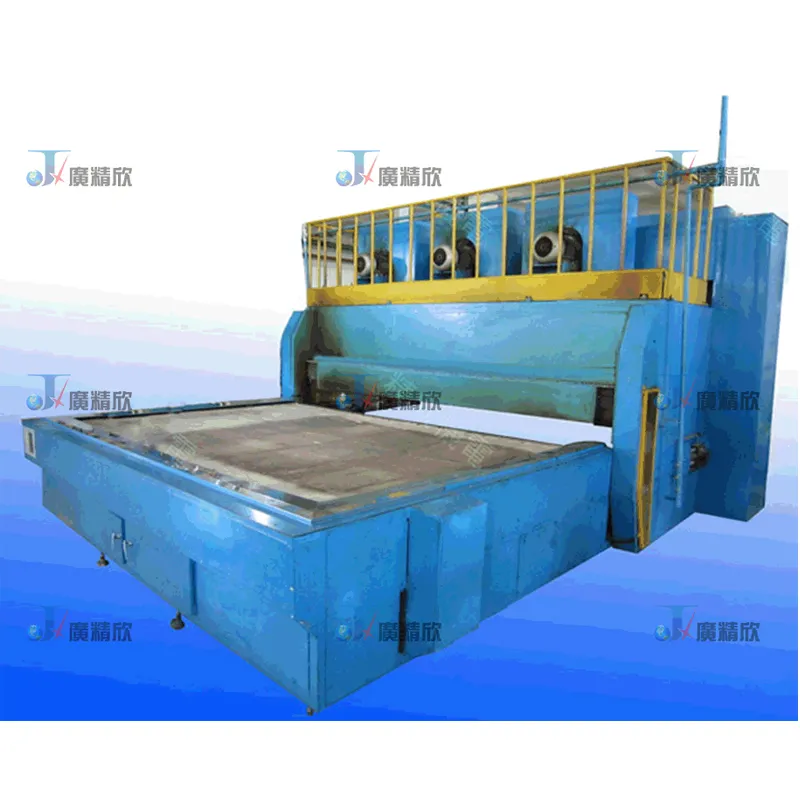
If you’re evaluating a car mat making machine for thermoplastic carpets, there’s a good chance you’re wrestling with quality consistency, energy costs, and cycle times. I’ve spent a chunk of my career in plants that smell like warm TPO—so, to be honest, I’ve seen what works on the floor and what just looks good in a brochure. The Internal Circulating Air Electrically Heating Oven from Chongqing (No.398, Qianxing Road, Qiantang Town, Hechuan District, P.R.C.) is one of those quiet, compact systems that tends to punch above its weight.
Industry context first. Globally, mat makers are shifting to TPO/TPE blends, lightweight PP felt backers, and closed-loop scrap reuse. Energy efficiency is the subtext in every RFQ; VOC and odor standards have tightened; and customers want traceability without hiring another three people to babysit the line. This oven’s two-tray interactive loading and same-side access—operable by one person—feels designed for that reality. Actually, it’s refreshing.
How it works (real-world flow)
Materials: TPO or TPE surface layers, PP nonwoven felt or EVA/XPE foam underlay, optional PU hot-melt webs. Methods: preheat in the oven (electric heating tubes + air mixing), transfer to press/mold, laminate backing, trim, then cool. Typical line pairs the oven with a vacuum/pressure forming station and a cutter. Testing: flammability per ISO 3795/FM VSS 302, abrasion DIN 53516 or ISO 12947, VOC ISO 12219-1, fogging ISO 6452, odor VDA 270, and color fastness ISO 105-X12. In practice, you’ll target surface gloss stability after 120–150 cycles and dimensional change below 1.0%.
Expected service life of mats: ≈5–8 years in passenger vehicles (real-world use may vary with climate and footwear). One plant reported less than 0.8% scrap after tuning air circulation over three weeks—surprisingly good for a compact footprint.
Product specifications (key signals)
| Model | Internal Circulating Air Electrically Heating Oven |
| Heating method | Electric heating tubes + air mixing circulation |
| Tray system | Two trays, interactive access (same-side loading/unloading) |
| Temp range | ≈80–220°C (material-dependent) |
| Uniformity | ±3–5°C across tray (typical after balancing) |
| Footprint | Small-area layout; line integrates base material tray + oven + interactive chain |
| Operators | 1 person (same-side access) |
| Power | Configured per region (e.g., 380–480V, 50/60Hz) |
Why this car mat making machine gets short-listed
- Compact, one-person operation—real labor savings.
- Stable thermal profile; fewer hot spots, fewer sags and orange-peel.
- Cleaner air mix helps with VOC targets and matte finish stability.
- Easy maintenance—fewer moving parts than conveyor ovens.
Applications: passenger car floor mats, trunk liners, 3D formed carpets, cargo trays. Industries: Tier-1/Tier-2 automotive interiors, aftermarket accessory makers, small-batch custom shops.
Vendor snapshot: comparing options
| Vendor | Key Features | Lead Time | Price (≈) | Footprint |
|---|---|---|---|---|
| Chongqing Headlining Line | Two-tray interactive, electric + air mixing, same-side access | 6–10 weeks | Mid-range | Small |
| Vendor A | Gas-fired tunnel, conveyor, high throughput | 10–14 weeks | High | Large |
| Vendor B | IR boost zones, recipe management | 8–12 weeks | Mid–High | Medium |
Customization and compliance
Options typically include wider trays for SUV mats, recipe locking, data logging for PPAP, and enhanced filtration for low-VOC programs. Certifications: CE-marked electricals, ISO 9001 manufacturing. Plants chasing FMVSS 302 and VDA 270 will appreciate the stable air mix—several customers say odor ratings improved a grade after switching.
Case note (quick):
A mid-size EU mat maker replaced a gas tunnel with this car mat making machine. Result after 60 days: cycle time −12%, scrap −20%, VOC (ISO 12219-1) down to 80–110 μg/m³ from ≈150 μg/m³, with abrasion loss at 120 mg (DIN 53516) on TPO topcoat—well within spec. “We didn’t expect the same-side access to cut walking time, but it did,” their production lead told me.
What to check before buying
- Uniformity map at your target temperatures and materials.
- Energy per cycle (kWh) with your exact layup thickness.
- Integration with your press/trimmer; safety interlocks; spare parts list.
Final thought: the car mat making machine space is evolving fast, but a compact electric oven with solid air mixing remains a safe, scalable bet—especially when labor and VOCs are under the microscope.
Authoritative citations
- ISO 3795 / FMVSS 302: Road vehicles — Determination of burning behavior of interior materials. https://www.nhtsa.gov/
- VDA 270: Determination of the odour of materials in motor vehicles. https://www.vda.de/
- ISO 12219-1: Interior air of road vehicles — VOC measurement. https://www.iso.org/
- ISO 6452: Fogging characteristics of trim materials. https://www.iso.org/