High Precision Solutions for Automotive Equipment Manufacturers
Achieving high-precision bonding and uniform thermal distribution is a critical challenge in the production of non-woven automotive carpets. The integration of thermoplastic coatings requires a delicate balance between heating speed and material integrity to prevent deformation. For specialists seeking to optimize interior component manufacturing, the shift toward infrared ceramic heating represents a significant leap in operational efficiency. By replacing traditional hot air systems, manufacturers can drastically reduce cycle times while ensuring consistent thickness across various product dimensions.
The Automotive Carpet Production Line is engineered to handle a wide array of substrates, from standard needle-punched fabrics to advanced composite materials. Whether producing luxury floor mats or high-strength industrial flooring, the synergy between an automated feeding mechanism and precision thermoforming allows for a seamless transition between different product sizes. This technical approach not only enhances output but also ensures that every unit meets the rigorous acoustic and durability standards required in the modern automotive interior.

Advanced Thermal Engineering via Infrared Ceramic Heating Systems
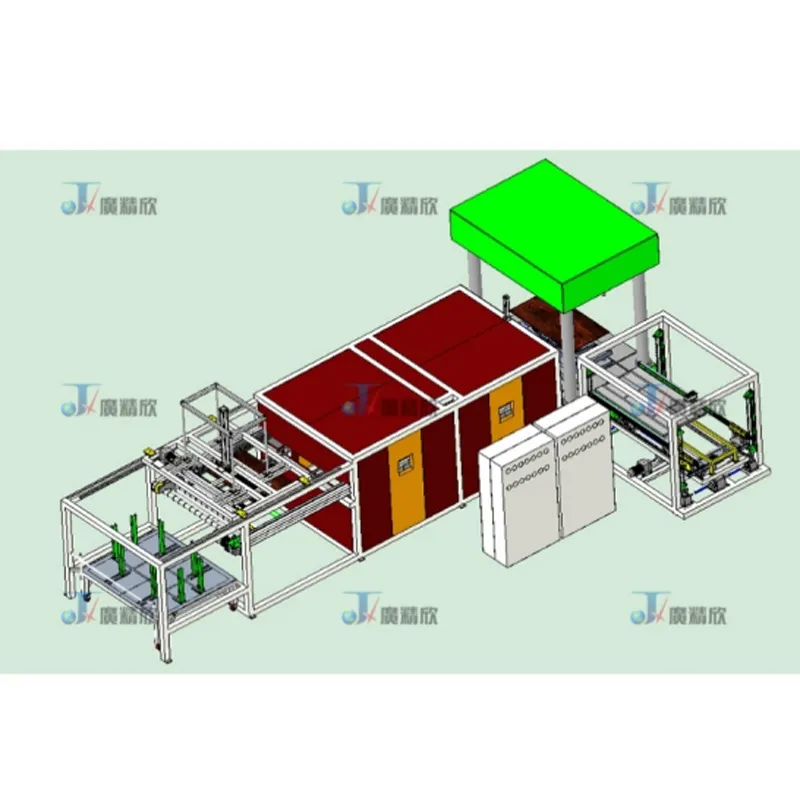
The core efficiency of this production line lies in its dual-oven infrared ceramic heating architecture. Unlike conventional convection ovens that heat the surrounding air, infrared technology penetrates the non-woven substrate directly, ensuring the thermoplastic coating reaches its melting point rapidly and uniformly. This targeted energy transfer is what enables a production speed of up to 55 seconds per piece, significantly maximizing throughput without compromising the structural integrity of the carpet.
Precision is maintained through adjustable heating zones, which allow operators to fine-tune the temperature based on the specific polymer used, such as PP, PET, or PVC. This capability prevents overheating and material degradation, ensuring that the bonding between the substrate and the coating is permanent and robust. Furthermore, the energy efficiency of these ceramic elements reduces overall power consumption by approximately 30-40%, aligning production goals with sustainability requirements.
- Rapid Thermal Response: Immediate heating reduces warm-up times and idle periods.
- Uniform Heat Distribution: Eliminates cold spots that typically lead to weak bonding.
- Material Compatibility: Versatile settings for various thermoplastic polymers.

Integrated Automation and Precision Material Handling
To maintain high output, the line utilizes a sophisticated automatic feeding mechanism specifically designed for needle-punched materials. This system ensures precise placement, which is the first step in preventing material misalignment during the conveyor phase. The width of the material-taking mechanism is fully adjustable, providing the flexibility to switch between different product sizes—such as narrow wheel house pads and wide main cabin floor mats—without extensive downtime.
The conveying system employs a high-grade stainless steel mesh belt, selected for its exceptional temperature resistance and durability. This mesh prevents the heated thermoplastic from sticking to the belt while providing a stable, slip-free platform for the substrate. Integrated tension controls ensure that the material remains flat and centered as it moves through the dual ovens and into the forming stage, eliminating the risk of wrinkles or uneven stretching.
The entire process is orchestrated by a PLC-based control system with a touchscreen interface. This allows for real-time synchronization between the feeding speed, oven temperature, and forming pressure. By automating these variables, the system reduces human error and ensures that the 55-second cycle time is consistent across thousands of production cycles.
Diversified Application Scenarios and Material Versatility
While primarily designed for the automotive sector, the technical capabilities of this line extend to various high-performance flooring and paneling applications. In the automotive realm, it is indispensable for producing lightweight, durable floor mats and sound insulation pads that must adhere to strict OEM specifications. The ability to toggle between cold press and thermoforming options allows for the creation of complex 3D shapes that fit perfectly into vehicle footwells.
Beyond the car interior, the system's compatibility with various non-woven fabrics makes it suitable for the production of eco-friendly home and office carpets with thermoplastic backing. Additionally, the high-pressure stability of the forming machine allows for the manufacture of industrial-grade anti-slip mats used in gyms and factories. The line can even be adapted for decorative acoustic panels, where a textured surface and specific thickness are required for soundproofing purposes.
The versatility of the material input—supporting PP, PET, PVC, and other composites—means that manufacturers can quickly pivot their product offerings to meet evolving market demands. Whether the requirement is for a luxury feel or heavy-duty industrial resilience, the adjustable parameters of the line provide the necessary engineering flexibility.
Technical Comparison of Heating and Forming Methods
| Feature | Infrared Ceramic (Our Line) | Conventional Hot Air | Manual Pressing | Cold Lamination |
|---|---|---|---|---|
| Heating Speed | Ultra-Fast | Moderate | Slow | N/A |
| Energy Efficiency | High (30-40% saving) | Low | Medium | High |
| Bonding Uniformity | Excellent | Variable | Low | Moderate |
| Cycle Time | ~55 Seconds/pc | 120+ Seconds/pc | Application-dependent | Fast |
| Material Range | Broad (PP/PET/PVC) | Limited | Limited | Specific Adhesives |
Critical Procurement Factors for Automotive Production Lines
When evaluating equipment from various automotive equipment manufacturers, procurement managers must look beyond the initial purchase price and analyze the Total Cost of Ownership (TCO). A primary consideration is energy consumption; the transition to infrared ceramic heating directly impacts monthly utility costs and the facility's overall carbon footprint. Additionally, the durability of the conveyor belt—specifically the use of stainless steel versus cheaper alloys—determines the frequency of maintenance intervals and unplanned downtime.
Customization capability is another pivotal factor. A rigid line that only handles one product size is a liability in a market where vehicle models change annually. The ability to adjust the feeding mechanism and forming dies ensures that the equipment remains relevant for multiple vehicle platforms. Buyers should also verify the PLC integration level, as a user-friendly interface reduces the training time for operators and minimizes the risk of configuration errors during product changeovers.
Finally, the stability of the forming pressure is what differentiates a premium product from a budget one. Inconsistent pressure leads to uneven thickness, which can cause fitment issues during the final assembly of the vehicle interior. Ensuring that the equipment provides high-pressure stability across the entire surface area is essential for maintaining a low reject rate and high quality-control standards.
Future Trends in Automotive Interior Manufacturing Automation
The trajectory of automotive interior production is moving toward increased modularity and "Industry 4.0" integration. We are seeing a shift where production lines are no longer static; instead, they are becoming flexible cells capable of rapid reconfiguration. The integration of smarter sensors within the infrared ovens will soon allow for closed-loop temperature control, where the system automatically adjusts heat based on the real-time thickness and moisture content of the incoming non-woven substrate.
Environmental regulations are also driving the adoption of more sustainable materials. The move toward bio-based thermoplastics and recycled PET fibers requires production equipment that can handle a wider variance in melting points. The current flexibility of the Automotive Carpet Production Line, with its adjustable temperature zones and material compatibility, positions manufacturers to adopt these green materials without needing to replace their entire capital infrastructure.
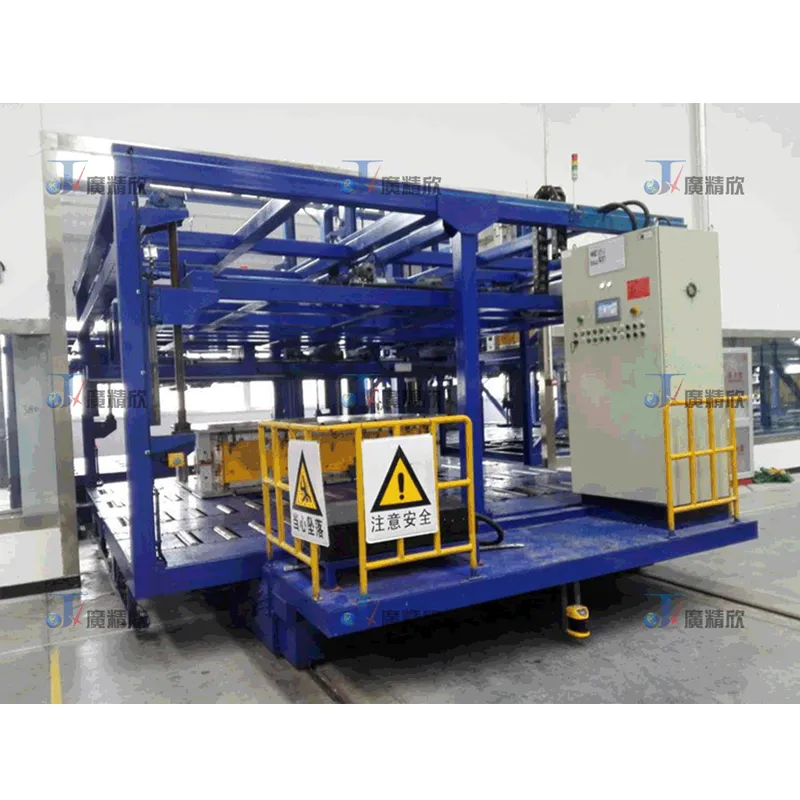
Moreover, the integration of robotic handling at both the feeding and unloading ends of the line is becoming standard. By reducing human intervention in high-heat areas, manufacturers can improve workplace safety and further reduce cycle times. The goal is a fully autonomous loop where the forming machine communicates directly with the warehouse management system to optimize the production sequence based on real-time order demand.
Technical FAQ: Automotive Carpet Production
What is the main advantage of infrared ceramic ovens over hot air ovens?
Infrared ceramic ovens provide direct radiant heat that penetrates the material faster and more uniformly than hot air. This results in a 30-40% increase in energy efficiency and significantly shorter cycle times, reaching up to 55 seconds per piece.
Can this line produce different sizes of carpets and mats?
Yes, the line features an adjustable width material-taking mechanism and flexible forming options, making it compatible with various product dimensions, from small interior pads to full-size automotive floor mats.
Which thermoplastic materials are compatible with this system?
The system is versatile and compatible with a wide range of thermoplastic polymers, including Polypropylene (PP), Polyethylene Terephthalate (PET), and Polyvinyl Chloride (PVC), as well as various composite materials.
How does the PLC system improve production quality?
The PLC and touchscreen interface allow for precise, synchronized control of temperature, conveyor speed, and forming pressure. This automation ensures consistency across production batches and minimizes human error.
Is the stainless steel mesh belt durable enough for high-temperature use?
Yes, the stainless steel mesh is specifically chosen for its high-temperature resistance and durability, ensuring smooth transportation of materials without deformation or sticking, even under continuous heat.
What are the most common maintenance requirements for this line?
Maintenance is generally low due to the stainless steel construction. Primary tasks include regular cleaning of the mesh belt and periodic calibration of the infrared heating elements and PLC sensors to maintain peak precision.
Industry Technical References
- ISO Standards for Automotive Interior Components
- SAE International - Vehicle Interior Material Specifications
- NIST Guide to Infrared Thermal Processing
- Plastics Industry Association - Thermoplastic Bonding Guides
For manufacturers aiming to scale their production while reducing energy overhead, investing in an automated, infrared-driven line is a strategic necessity. By prioritizing precision in thermal control and flexibility in material handling, you can ensure your facility remains competitive in the evolving automotive landscape.
Related Industry Insights