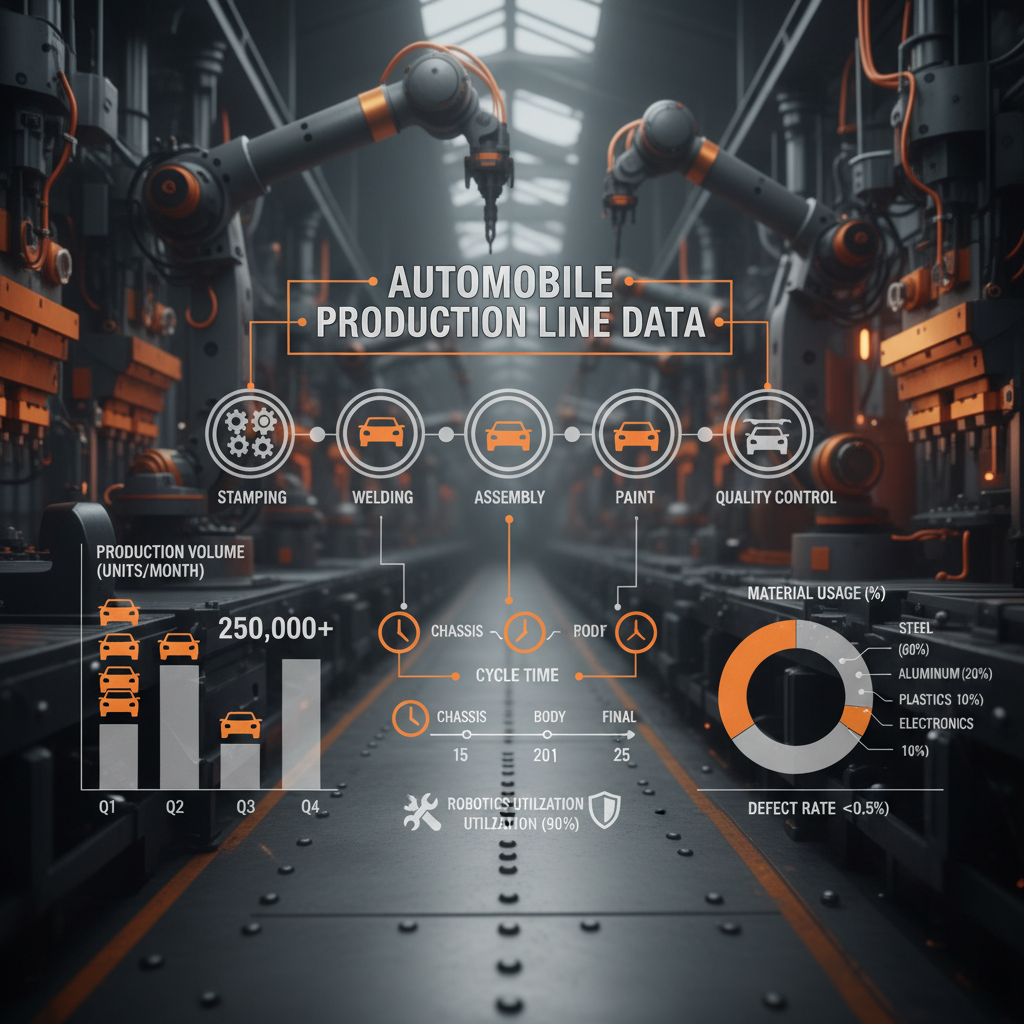
An automotive production line, specifically in the context of interior components, is a sophisticated integration of machinery designed to transform raw materials into high-precision parts like headliners and carpets. These systems utilize advanced foaming and lamination technologies to ensure that every vehicle interior meets strict safety and aesthetic standards. By automating the proportioning and mixing of chemical agents, these lines eliminate human error and ensure a consistent finish across thousands of units.
Manufacturers often struggle with material waste and inconsistent foam density, which can lead to product failure or poor acoustic insulation in the vehicle cabin. The challenge lies in balancing the chemical reaction speed with the production cycle time, especially when switching between different vehicle models. Without precise metering and visual parameter management, the risk of defective batches increases, leading to costly downtime and wasted raw materials.
This technical analysis explores the operational architecture of modern PU foaming systems within an automotive production line. We will examine how automatic metering, mobile stirring systems, and formula management optimize the creation of headliner boards and carpets. By the end of this guide, procurement managers and engineers will understand the critical selection criteria for equipment that maximizes throughput while maintaining stringent quality control.

1Core Architecture of PU Foaming Systems

The heart of a high-performance automotive production line for interiors is the PU foaming machine. This system is engineered to handle the complex chemistry of polyurethane, consisting of polyol and isocyanate. The architecture starts with specialized storage tanks that keep raw materials stable, followed by a high-precision proportioning system that draws exact amounts of each component based on pre-programmed chemical formulas.
Once proportioned, the materials enter the mixing and stirring system. Modern lines utilize an automatic mobile stirring mechanism, which ensures that the chemical reaction begins uniformly throughout the mixture. This prevents "cold spots" or areas of low density in the final foam, which is vital for components like headliner boards that require uniform structural integrity.
Finally, the blanking automatic metering system dispenses the mixture into the molds. This stage is where the visual parameter management comes into play, allowing operators to monitor flow rates and volumes in real-time, ensuring that every mold is filled to the exact specification without overflow or under-filling.
2Key Technical Features and Operational Value
The operational value of a modern automotive production line is derived from its ability to manage multiple variables simultaneously. One of the most critical features is the Multiple Formula Storage system. This allows a single production line to switch from a high-density foam used in carpets to a lightweight, sound-absorbing foam for headliners by simply recalling a different digital formula, drastically reducing changeover time.
The automatic blanking metering system further enhances value by optimizing raw material usage. By controlling the exact volume of foam dispensed, manufacturers can significantly reduce "flash" or excess material that must be trimmed and discarded, leading to a more sustainable and cost-effective manufacturing process.
Additionally, the visual parameter management system transforms the production floor from a reactive to a proactive environment. Operators can identify slight drifts in proportioning before they result in defective parts, allowing for mid-cycle adjustments that maintain quality without stopping the entire line.
3Practical Applications in Vehicle Interiors
In the automotive sector, these production lines are primarily deployed for the creation of polyurethane foam used in various interior modules. The most prominent application is in automobile headliner boards, where the foam provides the necessary rigidity to support the fabric while offering critical thermal and acoustic insulation for the passengers.
Beyond headliners, the system is essential for carpet foaming. By creating a foam-backed carpet, manufacturers can increase the comfort and durability of the vehicle floor while simultaneously reducing the overall weight of the vehicle, which is a primary goal for increasing fuel efficiency and EV range.
Furthermore, these lines are used for interior padding in door panels and dashboards. The ability to produce custom foam parts with varying densities allows designers to create "soft-touch" surfaces in luxury vehicles or high-durability surfaces in commercial vans, all using the same basic equipment infrastructure.
4Performance Metrics and Efficiency Analysis
Evaluating the performance of an automotive production line requires looking at the relationship between precision and throughput. A system with an automatic mobile stirring system typically shows a marked increase in foam uniformity compared to stationary mixing. This uniformity directly correlates to a lower scrap rate and higher adherence to OEM specifications.
The integration of automatic metering reduces the variance in material usage. In traditional systems, material waste can reach 10-15% due to over-pouring. With the advanced metering systems found in modern PU foaming machines, this waste is often reduced to below 3%, providing a direct impact on the bottom line.
automotive production line Performance Metrics
When analyzing ROI, the "Formula Recall" speed is a key metric. The ability to switch between product lines in minutes rather than hours allows manufacturers to handle smaller batch sizes profitably, enabling a more agile response to custom vehicle orders or limited-edition trim levels.
5Procurement and Implementation Guide
When selecting an automotive production line, procurement teams must prioritize the flexibility of the proportioning system. A system that can handle a wide range of viscosity levels in raw materials will be more future-proof as chemical suppliers innovate new, more environmentally friendly polyols.
Implementation requires a careful layout of the storage and mixing areas to minimize the travel distance of the foamed material. Because PU foam expands rapidly, the time between the mixing stage and the mold filling stage must be minimized to ensure the foam does not cure prematurely in the piping.
Finally, training operators on the visual parameter management system is essential. The hardware is only as effective as the operator's ability to interpret the data. Establishing a standard operating procedure (SOP) for formula adjustment is key to maintaining a "zero-defect" production goal.
6Industry Trends in Interior Manufacturing
The automotive industry is shifting toward sustainable materials, and the production line must adapt. We are seeing a trend toward the use of bio-based polyols. Modern foaming machines must be able to adjust proportioning formulas to account for the slightly different reaction kinetics of these sustainable raw materials.
Another major trend is the integration of Industry 4.0. Production lines are increasingly connected to centralized ERP systems, where the requested vehicle configuration automatically triggers the corresponding formula in the PU foaming machine, removing the possibility of human error during formula selection.
Weight reduction remains the primary driver of innovation. The development of "ultra-light" foams for EV interiors requires even more precise metering and stirring to maintain structural strength while stripping away as much mass as possible, pushing the limits of current foaming technology.
7Comparative Analysis of Production Methods
Choosing between different production methods depends on the volume and complexity of the interior parts. While manual mixing is feasible for prototypes, it is entirely unsuitable for mass production due to the lack of consistency and high material waste associated with non-automated processes.
Semi-automated lines provide a middle ground but often fail at the "blanking" stage, leading to uneven foam distribution. Fully automated automotive production lines, such as those featuring mobile stirring and digital formula management, offer the only viable path for high-volume OEM supply chains.
| Feature | Manual Mixing | Semi-Automated | Fully Automated Line |
|---|---|---|---|
| Consistency | Low / Variable | Moderate | High / Stable |
| Waste Rate | High (15%+) | Medium (7-10%) | Low ( |
| Setup Speed | Slow (Manual) | Moderate | Fast (Digital) |
| Quality Control | Visual Only | Basic Gauges | Visual Parameters |
| Labor Cost | High (Skilled) | Medium | Low (Supervisory) |
| Scalability | Poor | Limited | Excellent |
In summary, the transition to a fully automated line is not just about speed, but about the predictability of the chemical process. For manufacturers aiming for IATF 16949 certification, the level of control provided by automated metering is a non-negotiable requirement.
Frequently Asked Questions
Conclusion
Integrating a high-precision PU foaming system into an automotive production line is the only way to achieve the consistency and efficiency demanded by modern vehicle manufacturing. From the automatic mobile stirring that ensures structural uniformity to the digital formula management that allows for rapid product switching, these technologies eliminate the volatility of manual chemical processing. By reducing material waste and ensuring a zero-defect output, manufacturers can significantly lower their operational costs while increasing their capacity.
For companies looking to upgrade their interior component capabilities or establish a new production facility, focusing on automated metering and visual parameter control is essential. Readers evaluating suitable solutions can review the available product information and technical specifications at www.headliningline.com to ensure their equipment meets the rigorous standards of the automotive industry.